Inline Chrome Reduction of CR6----CR3
By SARTIME HOROLOGICAL (P) LTD
Price: On Request
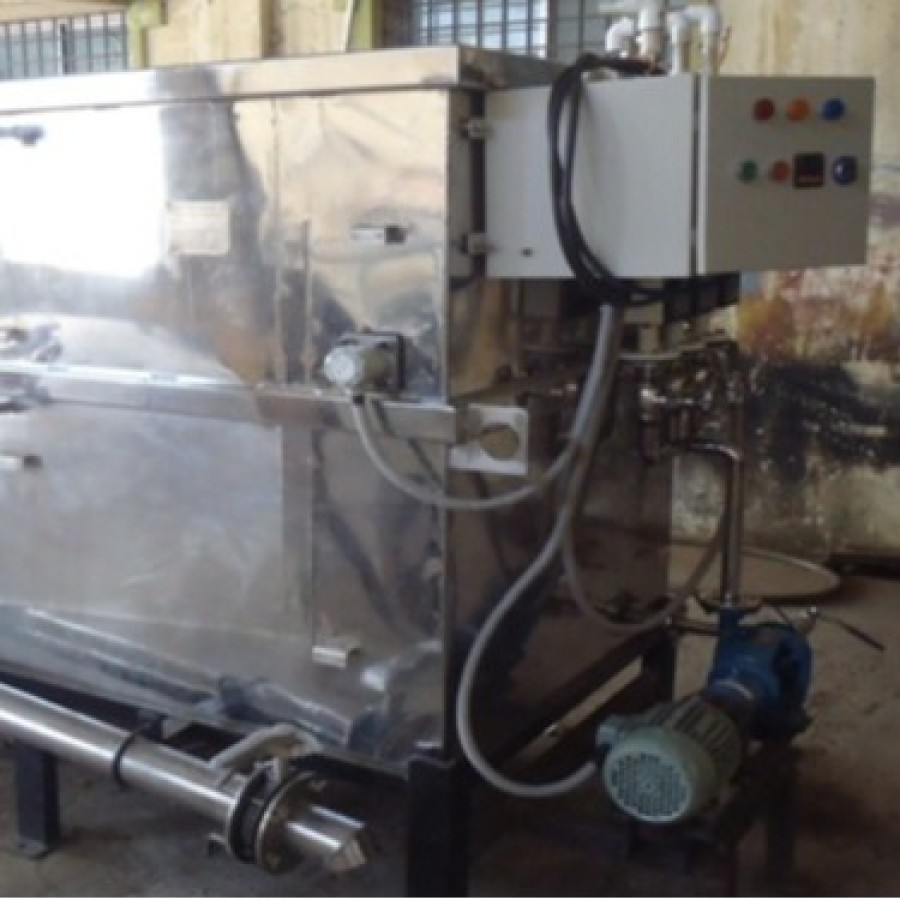
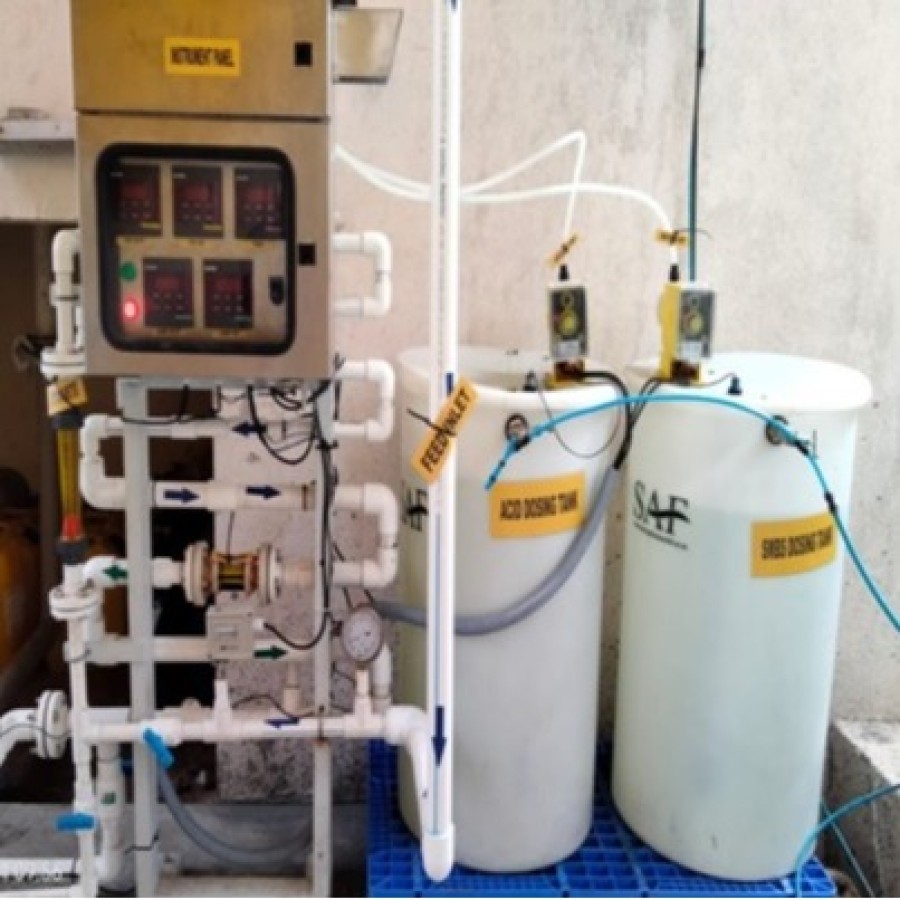
Inline Reduction of Cr6+ to Cr3- No toxic emission to air -No open Flash mixer & Flocculator- Treatment in closed Reactor.
60% Saving of SMBS, 40% Saving of Acid/Alkali, Space Saving (No storage tank required for collection and reaction
Process Overview
The reduction of hexavalent chromium [Cr(VI)] to trivalent chromium [Cr(III)] will decrease the mobility of chromium in the environment. The effort used sodium metabisulfite as the reducing agent. Sodium metabisulfite, when added to water, forms sodium bisulfite. In the presence of acid and Cr(VI), the sodium bisulfite has the following reaction.
First, hexavalent chromium, either in the form of chromate or dichromate, is reduced to trivalent chromium. Wastewater flows into the first reaction tank, where the pH is measured and acid is automatically brought into the process until a pH set point value in the acidic range is achieved. The reaction time is just a few minutes, and a lower pH for an even faster reaction would require considerably more acid. At the same time, the oxidation reduction potential (ORP) of the solution is measured, and sulfur sodium sulfite, or sodium metabisulfite is automatically injected until the ORP value is achieved.
Na2S2O5 + H2O 2NaHSO3
3NaHSO3 + 2H2CrO4 + 3H2SO4 Cr2(SO4)3 + 5H2O + 3NaHSO
After the hexavalent chromium is reduced to the trivalent state, it is then reacted with caustic to precipitate chromium hydroxide [Cr(OH)3].
Cr2(SO4)3 + 3NaOH 2Cr(OH)3 + 3Na2SO4
60% Saving of SMBS, 40% Saving of Acid/Alkali, Space Saving (No storage tank required for collection and reaction
Process Overview
The reduction of hexavalent chromium [Cr(VI)] to trivalent chromium [Cr(III)] will decrease the mobility of chromium in the environment. The effort used sodium metabisulfite as the reducing agent. Sodium metabisulfite, when added to water, forms sodium bisulfite. In the presence of acid and Cr(VI), the sodium bisulfite has the following reaction.
First, hexavalent chromium, either in the form of chromate or dichromate, is reduced to trivalent chromium. Wastewater flows into the first reaction tank, where the pH is measured and acid is automatically brought into the process until a pH set point value in the acidic range is achieved. The reaction time is just a few minutes, and a lower pH for an even faster reaction would require considerably more acid. At the same time, the oxidation reduction potential (ORP) of the solution is measured, and sulfur sodium sulfite, or sodium metabisulfite is automatically injected until the ORP value is achieved.
Na2S2O5 + H2O 2NaHSO3
3NaHSO3 + 2H2CrO4 + 3H2SO4 Cr2(SO4)3 + 5H2O + 3NaHSO
After the hexavalent chromium is reduced to the trivalent state, it is then reacted with caustic to precipitate chromium hydroxide [Cr(OH)3].
Cr2(SO4)3 + 3NaOH 2Cr(OH)3 + 3Na2SO4
Product Description
Inline Reduction of Cr6+ to Cr3- No toxic emission to air -No open Flash mixer & Flocculator- Treatment in closed Reactor.
60% Saving of SMBS, 40% Saving of Acid/Alkali, Space Saving (No storage tank required for collection and reaction
Process Overview
The reduction of hexavalent chromium [Cr(VI)] to trivalent chromium [Cr(III)] will decrease the mobility of chromium in the environment. The effort used sodium metabisulfite as the reducing agent. Sodium metabisulfite, when added to water, forms sodium bisulfite. In the presence of acid and Cr(VI), the sodium bisulfite has the following reaction.
First, hexavalent chromium, either in the form of chromate or dichromate, is reduced to trivalent chromium. Wastewater flows into the first reaction tank, where the pH is measured and acid is automatically brought into the process until a pH set point value in the acidic range is achieved. The reaction time is just a few minutes, and a lower pH for an even faster reaction would require considerably more acid. At the same time, the oxidation reduction potential (ORP) of the solution is measured, and sulfur sodium sulfite, or sodium metabisulfite is automatically injected until the ORP value is achieved.
Na2S2O5 + H2O 2NaHSO3
3NaHSO3 + 2H2CrO4 + 3H2SO4 Cr2(SO4)3 + 5H2O + 3NaHSO
After the hexavalent chromium is reduced to the trivalent state, it is then reacted with caustic to precipitate chromium hydroxide [Cr(OH)3].
Cr2(SO4)3 + 3NaOH 2Cr(OH)3 + 3Na2SO4
60% Saving of SMBS, 40% Saving of Acid/Alkali, Space Saving (No storage tank required for collection and reaction
Process Overview
The reduction of hexavalent chromium [Cr(VI)] to trivalent chromium [Cr(III)] will decrease the mobility of chromium in the environment. The effort used sodium metabisulfite as the reducing agent. Sodium metabisulfite, when added to water, forms sodium bisulfite. In the presence of acid and Cr(VI), the sodium bisulfite has the following reaction.
First, hexavalent chromium, either in the form of chromate or dichromate, is reduced to trivalent chromium. Wastewater flows into the first reaction tank, where the pH is measured and acid is automatically brought into the process until a pH set point value in the acidic range is achieved. The reaction time is just a few minutes, and a lower pH for an even faster reaction would require considerably more acid. At the same time, the oxidation reduction potential (ORP) of the solution is measured, and sulfur sodium sulfite, or sodium metabisulfite is automatically injected until the ORP value is achieved.
Na2S2O5 + H2O 2NaHSO3
3NaHSO3 + 2H2CrO4 + 3H2SO4 Cr2(SO4)3 + 5H2O + 3NaHSO
After the hexavalent chromium is reduced to the trivalent state, it is then reacted with caustic to precipitate chromium hydroxide [Cr(OH)3].
Cr2(SO4)3 + 3NaOH 2Cr(OH)3 + 3Na2SO4
Export Countries
Germany
Related Sectors
Chemicals
Design
Drugs & Pharmaceuticals
Petrochemicals
Water
Web Link
About the Company
Established in 1990 in Chennai, Tamil Nadu, India, Sartime Horological Private Limited is one of the leading manufacturers and exporters of water purification plants and systems.
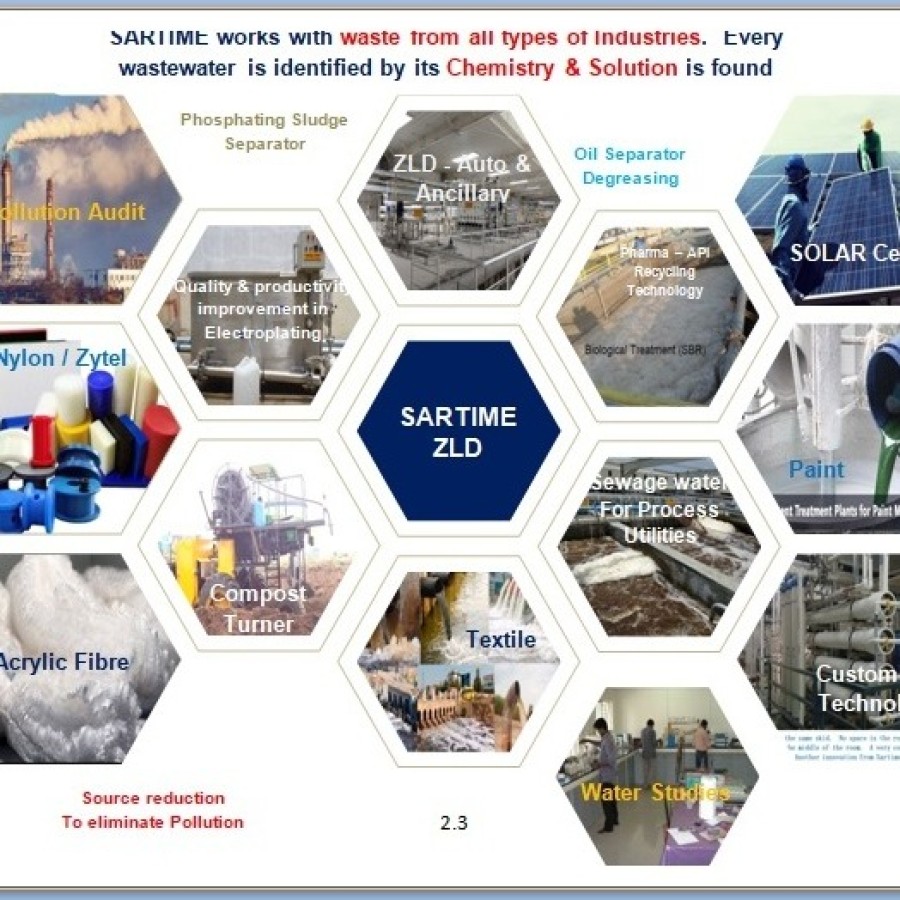
Our comprehensive product portfolio includes ZLD Effluent Treatment Plants (ETP), RO Plants, Evaporators, Ultra filtration systems, Sequential Batch Reactors (SBR), Advanced Membrane Separation Systems, Oil Separators/Skimmers & Phosphate Sludge Separators.
Backed by well-developed R&D capabilities, a structured process-driven methodology, and the expertise of experienced industry professionals, we maintain a well-defined approach in every project we undertake. Through detailed performance analysis of each equipment component, we implement process enhancements and innovative modifications that are not commonly adopted in the pollution control industry.
We specialize in providing customized plant technology solutions tailored to our customers’ specific operational and environmental requirements. Our expertise lies in comprehensive process evaluation and treatment scheme development, enabling us to identify opportunities to minimize waste at the source itself. By leveraging strong research capabilities and technical insight, we consistently deliver performance improvements beyond conventional approaches.
We adopt advanced technologies that reduce operational costs while effectively controlling pollution, enabling organizations to strengthen their competitive advantage. For clients facing complex effluent treatment or pollution challenges that remain unresolved through conventional equipment additions or strategies, we offer proven expertise in delivering practical and sustainable solutions.
Our comprehensive product portfolio includes ZLD Effluent Treatment Plants (ETP), RO Plants, Evaporators, Ultra filtration systems, Sequential Batch Reactors (SBR), Advanced Membrane Separation Systems, Oil Separators/Skimmers & Phosphate Sludge Separators.
Backed by well-developed R&D capabilities, a structured process-driven methodology, and the expertise of experienced industry professionals, we maintain a well-defined approach in every project we undertake. Through detailed performance analysis of each equipment component, we implement process enhancements and innovative modifications that are not commonly adopted in the pollution control industry.
We specialize in providing customized plant technology solutions tailored to our customers’ specific operational and environmental requirements. Our expertise lies in comprehensive process evaluation and treatment scheme development, enabling us to identify opportunities to minimize waste at the source itself. By leveraging strong research capabilities and technical insight, we consistently deliver performance improvements beyond conventional approaches.
We adopt advanced technologies that reduce operational costs while effectively controlling pollution, enabling organizations to strengthen their competitive advantage. For clients facing complex effluent treatment or pollution challenges that remain unresolved through conventional equipment additions or strategies, we offer proven expertise in delivering practical and sustainable solutions.
Login to see seller contact details.
Product Reviews
More products by SARTIME HOROLOGICAL (P) LTD